


Summary
How can participation strengthen democracy? New research shows that deliberative mini-publics can build confidence in citizens’ own abilities and in others’ capacity to contribute, with time and disagreement shaping the effects.
Why democracy needs confidence
Democracy depends on people being willing to speak, listen and disagree. That takes confidence in our own abilities, but also in other people’s ability to contribute. In the article “Gaining Confidence – Examining the Effects of Participation in Deliberative Mini-Publics on Self- and Other-Regarding Democratic Beliefs” recently published in the journal Political Studies, Frederik Pfeiffer from the University of Gothenburg, Tim Daw from Stockholm University and Gävle University, and Vera Telemo from Stockholm University examined whether organised discussions can strengthen these beliefs. The study focused on citizens’ assemblies and similar forums, often called deliberative mini-publics, who bring together small randomly-selected groups of citizens to discuss public issues in depth. The findings of the study suggest that participation can indeed build people’s confidence in themselves and their fellow participants. But the gains varied with the setting, highlighting that time and disagreement matter.
Studying confidence in Sweden
The study focused on three forums held in Sweden in 2024: the Swedish Climate Assembly that discussed how Sweden should meet its emissions targets, as well as two smaller and citizens’ juries, one that explored the future of the Nämdö archipelago and one the management of forests owned by the three municipalities around Voxnadalen Biosphere reserve. Participants completed surveys before and after taking part, allowing the researchers to track changes in three beliefs that may help people engage in political conversations. First, do they feel capable of understanding politics and contributing themselves? Second, do they believe other people have the abilities needed to contribute? And third, how tolerant are they of people who hold opposing views?
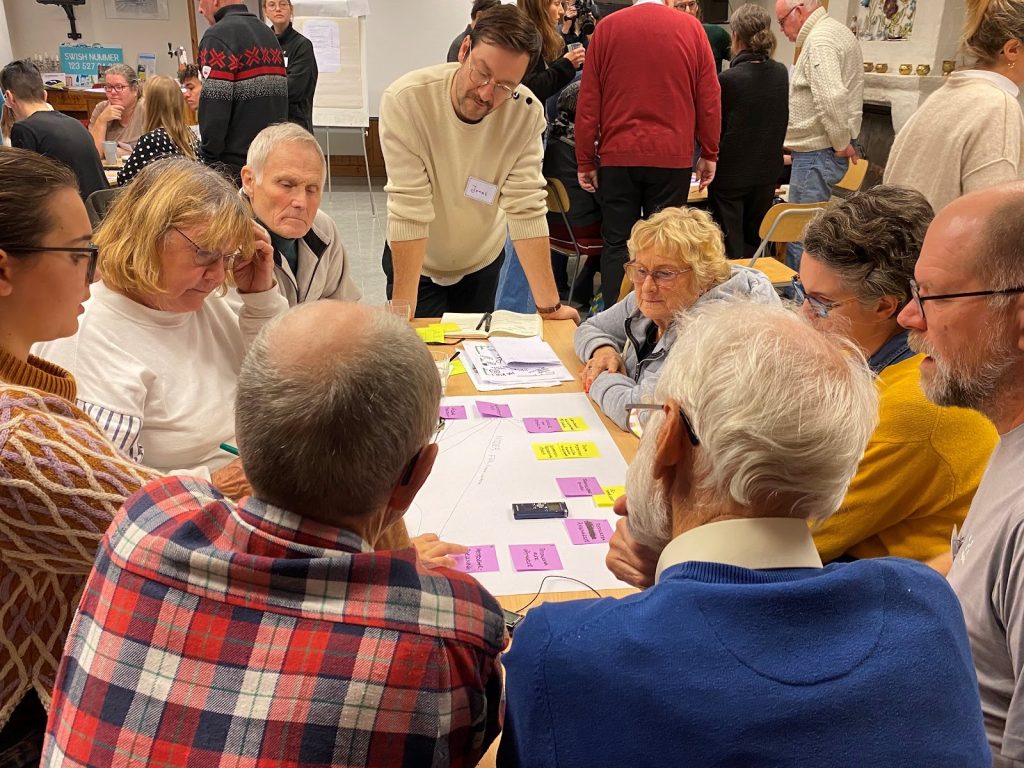
While studying the citizens jury’s the researchers found that, while participants’ increased their confidence in those sitting around the table, this did not always extend to citizens in general.
Confidence grew, but not in every case
The clearest gains were in participants’ confidence in their own abilities and in those of the people they discussed with. These gains appeared even though confidence was already high before the meetings began. But the results did not show a uniform increase in every democratic belief. While participants’ increased their confidence in those sitting around the table, this did not always extend to citizens in general. This distinction is important. Believing that the people you have met can contribute is not the same as believing this about people you have never encountered. Nor does feeling more capable necessarily mean becoming more accepting of political disagreement. The findings therefore offer encouragement without suggesting that a few organised conversations can resolve the wider challenges facing democratic societies. However, the researchers also compared the three forums to explore whether their design and political context mattered.
Why time and context matter
Confidence also seemed to depend on the setting. Across the three forums, the researchers found stronger gains when participants had more time to discuss the issues. Gains were also stronger where the topic was more politically contested. This suggests that difficult issues do not prevent impactful encounters between citizens. Rather, they may offer opportunities for citizens to recognise their own abilities and those of others. Indeed, disagreement in the right setting challenges and encourages citizens to put themselves into the shoes of their discussion partners and allows for more learning opportunities. Of course, the surveys do not tell us whether greater confidence lasts or leads to more political conversations in the long run. And citizens’ assemblies reach relatively few people directly, so their wider democratic impact should not be taken for granted. Even so, the findings suggest that creating opportunities for discussion matters, but so does allowing time to engage with opposing views and learn from one another. Democracy needs spaces where citizens can discover what they, and others, have to contribute.
Blog post by Frederik Pfeiffer and Tim Daw.